


Lavandula angustifolia
Lavender
Thermal Nature / Si Qi
Cool nature
Flavor / Wu Wei
Pungent (Acrid)
Sweet
Key Benefits
Promotes Relaxation
Helps Maintain Natural Balance
Relieves Skin Discomfort (External Use)
Characteristics
Aromatic & Uplifting
Cooling & Moisturizing
Calming & Spirit-Soothing
Ingredient Pairing & Use
description
Related Products
-
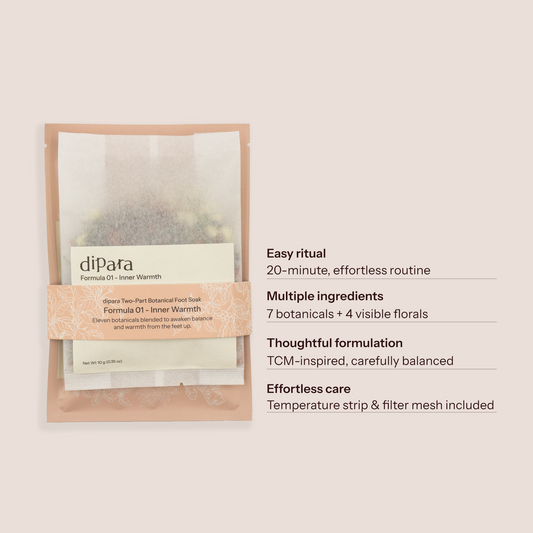 Intro Offer
Herbal Foot Soak for Warmth & Relaxation-Starter Set (3 Soaks)
3 SoaksRegular price $12.99 USDRegular price$17.00 USDSale price $12.99 USDIntro Offer -

Herbal Foot Soak for Warmth & Relaxation-3 soaks with foldable basin
3 Soaks + Foldable BasinHerbal Foot Soak for Warmth & Relaxation-3 soaks with foldable basin
3 Soaks + Foldable BasinRegular price $24.00 USDRegular price -
Herbal Foot Soak for Warmth & Relaxation-Ritual Bundle (6 Soaks)
6 SoaksRegular price $28.00 USDRegular price

